
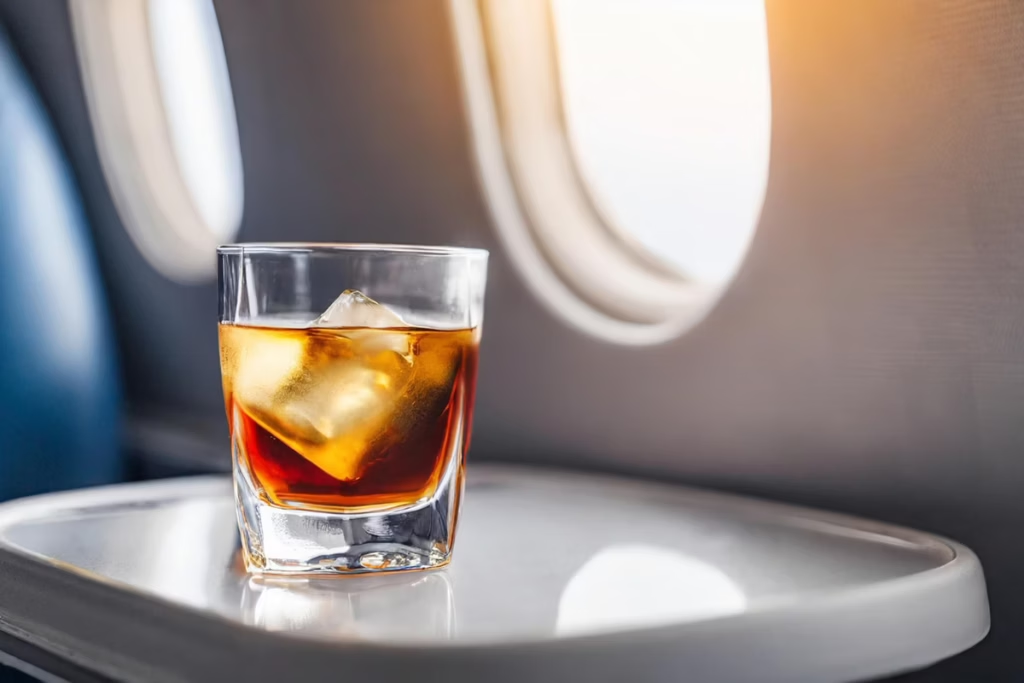
If you have decided to come to rehab in Thailand, one of the first practical worries that tends to surface is the flight. Not the cost of it, or the visa, or what to pack. The drinking. Or the drugs. The fact that you are still using right now, that you might use the night before you fly, and that you will be sitting on a plane for nine, twelve, sometimes fifteen hours, without access to whatever you usually rely on.
It is a fair concern to raise, and one our admissions team hears almost every week. The short answer is that no, you do not need medical detox before you fly. In fact, attempting to detox at home without medical supervision can be dangerous, and trying to do it in the days before a long-haul flight can put you in a worse position than the one you started in. What you do need is a plan, and a treatment team who can build one with you based on what you have been using, how much, and for how long.
This blog walks through what to expect, what the risks actually are, and how the admissions process handles all of this before you ever step onto the plane.
Should I Try to Quit Before I Fly to Rehab?
It is a natural instinct. You have made the decision to get help, you want to arrive in the best possible state, and you assume that turning up sober is part of doing this properly. For most clients, that is the wrong call.
Alcohol and benzodiazepine withdrawal in particular can be medically serious. Stopping suddenly, without supervision, can trigger seizures, severe tremors, hallucinations, and in some cases delirium tremens, which carries a real risk of death. Opioid withdrawal is rarely fatal, but it is physically punishing in ways that would make a long-haul flight unbearable. Stimulant withdrawal (cocaine, ice, ketamine) is usually less physically dangerous but can produce intense psychological symptoms in the days after the last use.
The point is not to alarm you. The point is that the people best placed to manage withdrawal are clinicians, not you on your own at home in the week before a flight. Our admissions team will assess what you have been using and how much, and from there decide what makes sense.
What this usually looks like in practice: for most clients, you continue using at your usual level, you do not attempt to cut down in the days before the flight, and you fly as you are. Detox then starts on arrival, in a residential setting, with 24/7 medical supervision.
Will I Withdraw on the Plane?
This is the question most clients actually want answered, and it is worth taking seriously. A flight from London to Bangkok is around twelve hours. Add the time at the airport before boarding, the connection through Bangkok or another hub, and the onward flight to Chiang Mai, and the door-to-door journey can stretch to eighteen or twenty hours.
If you are physically dependent on alcohol, that is a long time. Significant withdrawal symptoms can start within six to twelve hours of your last drink for a heavy daily drinker, and they get worse before they get better. Without a plan, you could be in mid-flight when the worst of it hits.
How the Admissions Team Plans Around This
This is exactly what the pre-flight conversation with our admissions team is for. Based on your assessment, the team will give you specific guidance on what to do in the twenty-four hours before you fly. For most clients with alcohol dependence, that means continuing to drink at your usual level on the day of travel, so that withdrawal does not begin before you arrive. The same logic applies to benzodiazepines and opioids.
In some cases, our medical team will suggest you speak with your own doctor about whether short-term medication could help you stay stable during the journey. Any prescribing decisions sit with your home doctor, not with us. Our role is to share what we know from working with clients in similar situations and to make sure that whatever happens before you board the plane fits with the detox plan we have ready for you on arrival.
What Airlines Will and Will Not Tolerate
It is worth being honest about this. Airlines will not refuse to carry someone who has been drinking, but they will refuse to board someone who is visibly intoxicated or behaving erratically. The goal of the pre-flight plan is to keep your body stable enough to travel without going into acute withdrawal, and without drawing attention to yourself at the gate. Our admissions team can talk you through exactly what that looks like for your situation.
What If I Am Using Drugs, Not Alcohol?
The same logic applies but the specifics differ by substance. If you are using opioids such as heroin, prescription painkillers, or methadone, withdrawal can begin within twelve to twenty-four hours of your last dose, and the discomfort is severe enough that flying through it is not realistic. The pre-flight plan will usually involve continuing to use at your maintenance level until shortly before the flight.
If you are using cocaine, ice, or other stimulants, physical withdrawal is less of a concern, but the crash that follows heavy use can leave you exhausted, depressed, and emotionally fragile. Our admissions team will factor this into your travel guidance.
If you are using benzodiazepines such as Xanax, Valium, or Lyrica, do not attempt to stop before the flight under any circumstances. Benzo withdrawal is one of the few withdrawals that can be fatal, and it is the one where unsupervised tapering goes wrong most often. The team will plan around this carefully.
What Happens When I Land in Thailand?
Our team meets you at Chiang Mai airport. You are brought directly to the centre, where the medical team is ready for you. The initial assessment happens within the first few hours of arrival, and detox begins immediately if it is needed.
Detox at The Dawn is residential and medically supervised. Our nursing team is on shift around the clock, and the addiction psychiatrist reviews each client during the early days. Withdrawal symptoms are managed with appropriate medication, your vital signs are monitored, and your sleep, hydration, and nutrition are looked after. The aim is to make detox as safe and as comfortable as we can while your body resets.
This first stage typically takes one to two weeks depending on the substance and the severity of dependence. From there, treatment moves into the next phase of our Treatment Roadmap, which guides each client through the three-phase journey from detox to lasting recovery.
Why Not Just Detox and Stabilize Before Rehab at Home First?

This is the version of the question most clients arrive with: would it not be simpler to detox at home, get clean, then fly to rehab as a recovering person rather than someone still using? On paper it sounds sensible. In practice it almost never works, for three reasons.
The first is medical. Home detox without supervision is risky for alcohol and benzodiazepines, and uncomfortable enough for opioids that most attempts fail. People drink or use again to make the symptoms stop, which is not a moral failure. It is what bodies in withdrawal do.
The second is logistical. Even when home detox does work, the period immediately after is when relapse risk is at its highest. You have just put yourself through several days of physical hell, your sleep is wrecked, your emotions are raw, and the substance you have been using is no longer in your system to take the edge off. Sitting on a long-haul flight in that state, with no clinical support around you, makes either a mid-flight crisis or a relapse on arrival far more likely.
The third is clinical. Detox is not just a hurdle to clear before treatment begins. It is the first phase of alcohol detoxification in Thailand at The Dawn, and the information your medical team gathers during those first one to two weeks (how your body responds, what symptoms you present with, what underlying conditions surface) feeds directly into the rest of your treatment plan. Doing it alone at home means arriving at rehab without that clinical picture, and starting from scratch.
What If I Am Too Unwell to Fly?
In some cases, the honest answer is that you are not in a fit state to travel, and our admissions team will tell you so. If your dependence is severe enough that a long-haul flight carries real medical risk, the safer route is to do a hospital-based detox in your home country first, then fly to Thailand once you are stable. This is not the most common scenario, but it does happen.
If that is the position you are in, we can talk you through it during the admissions call and help you think through how to access detox locally. Once you are through the acute withdrawal phase, the rest of your treatment in Thailand becomes much more accessible.
The Next Step
The pre-flight conversation is one of the most important calls our admissions team has with any new client. It is where the practical worries get answered, where your travel and detox plan gets built, and where the question of what you should do in the days before you fly gets sorted out properly.
If you are weighing up rehab in Thailand and the flight is one of the things holding you back, reach out to our admissions team. We can talk through your specific situation, work out what medical detox you need and when, and help you plan a journey you can actually make.
FAQs | Do I Need to Detox Before Going to Rehab in Thailand?
Q. Can I drink at the airport before my flight?
A: If you are physically dependent on alcohol and your admissions plan involves continuing to drink until shortly before boarding, then yes. The goal is to stay stable, not to arrive at the gate drunk. Your admissions team will give you specific guidance based on your situation.
Q. Will the airline know I am travelling for rehab?
A: No. There is nothing in your booking, your passport, or your visa that flags this. Your treatment is confidential, and the only people who know why you are travelling are the ones you tell.
Q. How long does alcohol detox in Thailand take?
A: Typically one to two weeks, though it varies depending on the substance and the level of dependence. Stimulant detox is usually shorter physically but can carry a longer psychological adjustment. For a deeper look at the day-by-day timeline, see the companion blog on what alcohol detox at a Thai rehab actually looks like (cross-link to be added on publication).
Q. Is detox included in the cost of the programme?
A: Yes. Detox is the first phase of the residential programme. There are no separate detox fees. Our admissions team can walk you through the full costs based on the length of stay you are considering.
Q. What if I relapse on the way to the airport?
A: It happens, and it does not change the plan. Let our admissions team know what has happened, get on the flight, and the medical team will adjust your intake assessment accordingly when you arrive. Nobody is going to be disappointed in you. The work starts when you get here.