
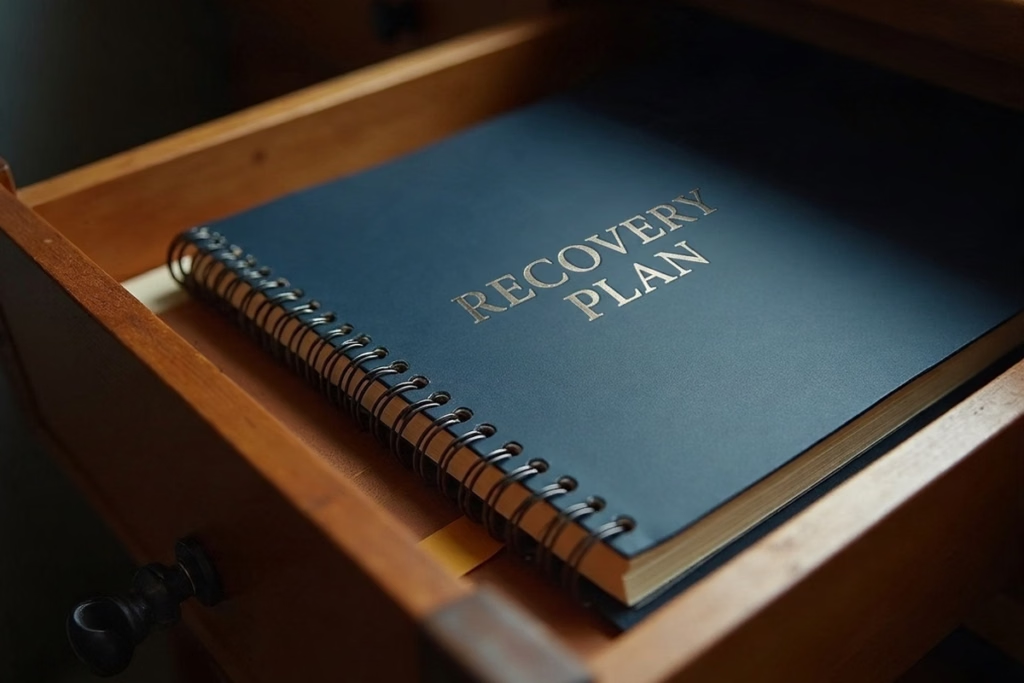
You left treatment with a plan. It was thorough, personal, and built with your therapist during some of the most clear-eyed weeks of your life. It named your triggers, your supports, your warning signs, and what to do when they appeared. And if you are like a great many alumni, you have not looked at it in months. It lives in a drawer, or a folder on your laptop, somewhere between a keepsake and a mild source of guilt.
If that is you, this is not a telling-off. It is an invitation to get the plan back out, and a look at why it ended up in the drawer in the first place.
Why Recovery Plans End Up in Drawers
The first reason is simply that life speeds up. The plan was written in the protected calm of treatment, and ordinary life has no such calm. Work resumes, family needs resume, and the document that once felt central starts to feel like it belongs to a different chapter.
The second reason is subtler: the plan becomes associated with the treatment version of you. Reading it can feel like being sent back to the beginning, as if needing the plan means you have not progressed.
And the third reason is shame. The longer it sits untouched, the more opening it feels like an admission, so it stays shut, which is exactly how a useful tool becomes a guilty object.
A Plan Is a Living Document
All three reasons rest on the same misunderstanding: that the plan was a set of discharge instructions rather than a working tool. Research describes recovery from addiction the way clinicians describe managing any long-term condition: support is ongoing, and the approach is reviewed and adjusted as circumstances change. Nobody expects the plan written in week ten of treatment to fit, unedited, the life you are living a year later. It was never supposed to. It was supposed to be revised.
This is why the Continuing Care Plan is built during treatment itself, woven into the second phase of The Dawn’s treatment approach, precisely so that you leave with a working draft rather than a finished verdict. Draft is the operative word.
Bringing It Back Without Shame
Start small. Take the plan out and read it once, with curiosity rather than judgement, the way you would read a letter from a friend who knew you well. Notice what still fits, what has quietly become automatic, and what no longer matches your life at all. Every item in that third category is not a failure. It is evidence that you have changed, which is the entire point.
Then make one practical shift that costs nothing: keep the plan somewhere you will actually see it. A drawer means it will only be found in a crisis, which is the worst possible moment to be reading it for the first time in months. Visible does not mean framed on the wall. Inside a wardrobe door, the front of a journal, a note pinned on your phone. The plan works by being ordinary furniture in your life, not an emergency manual.
Finally, share the revisit with one person, a sponsor, a peer, someone from your support circle. A plan one other person knows about is dramatically more likely to be used than a private one.
When to Rewrite Rather Than Revisit
Some moments call for more than a light update. A house move, a new job, a relationship beginning or ending, a bereavement, or simply the recognition that your warning signs have changed shape, these are rewrite moments, best done with support rather than alone. Your therapist can help, and The Dawn’s aftercare support and relapse prevention programme gives alumni a standing place to think this through with people who maintain plans of their own. A plan revised after a big life change is not a step backwards. It is the plan doing exactly what it was designed to do.

The Drawer Is Not the End of the Story
A recovery plan gathering dust says nothing final about your recovery. It says only that the tool and your life drifted apart for a while, and that is fixable this afternoon. Take it out, read it kindly, update one section, and leave it somewhere you will see it. If you would like help rebuilding your plan, or you are considering treatment and want to understand how continuing care works, contact our Admissions Team for a confidential conversation.
FAQs about When the Recovery Plan Lives in a Drawer
A good plan names your personal triggers and early warning signs, the daily and weekly routines that keep you stable, the people you contact and in what order, and the concrete steps you take if cravings or a lapse occur. The most useful plans are short enough to actually use.
A light review every few months works well for most people, with a fuller rewrite after any significant life change such as a move, a new job, or a loss. The test is simple: if the plan describes a life you are no longer living, it is due an update.
Not at all. A plan made a year into recovery, informed by real experience of your triggers and supports, is often stronger than one made at discharge. A therapist or aftercare group can help you build one at any stage.