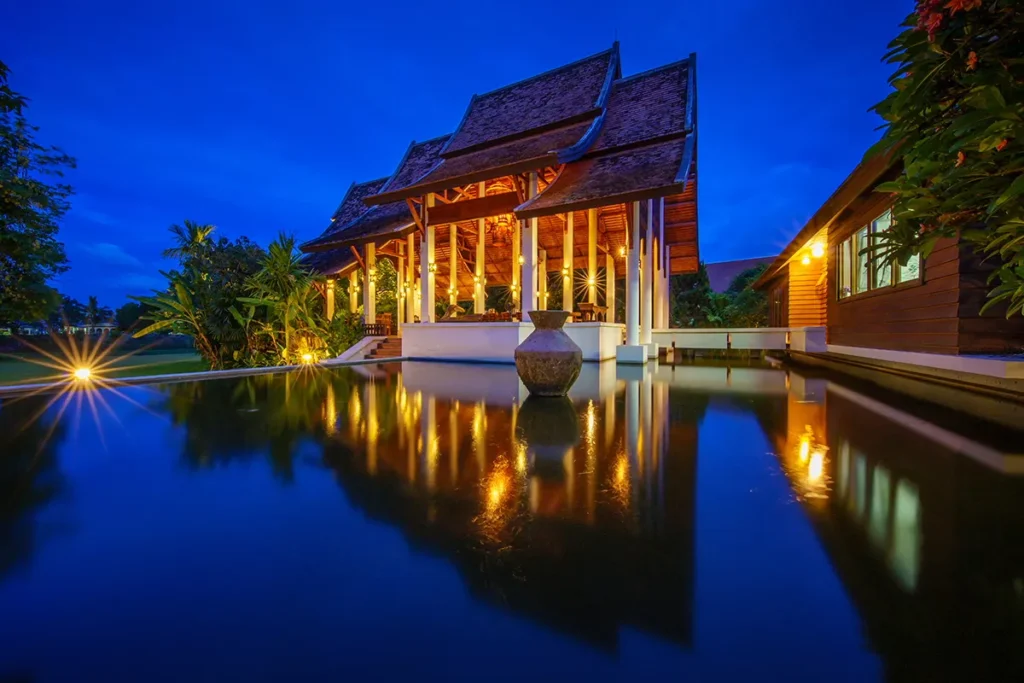
The best trauma and PTSD treatment centres in the world combine trauma-specific therapies, trauma-trained therapists and a focus on stabilising clients emotionally before deeper trauma work begins. This guide compares eight leading trauma centres across six countries by location, key modalities, programme length and cost, and identifies the type of trauma or client for which each centre is best suited.
Top Trauma and PTSD Treatment Centres Compared by Location, Modalities, Length and Cost
| Centre | Location | Key modalities | Programme length | Cost |
|---|---|---|---|---|
| The Meadows | Arizona, US | Post Induction Therapy (PIT), EMDR, Somatic Experiencing, neurofeedback, IFS, equine therapy | 45 days | US$27,400 to 35,200 for 28 days |
| The Dawn Rehab Thailand | Chiang Mai, Thailand | Trauma-focused individual therapy (EMDR, TF-CBT, exposure therapy), trauma-focused group therapy, trauma-focused somatic therapy (Tension and Trauma Releasing Exercises) | Minimum 8 weeks | US$10,000 to 20,000 for 28 daysCost range for high-quality residential treatment in Thailand |
| Sierra Tucson | Arizona, US | EMDR, Somatic Experiencing, CBT, DBT, psychodrama | 30 days | US$36,000 for 28 days |
| Khiron Clinics | Oxfordshire, UK | EMDR, Somatic Experiencing, IFS, Sensorimotor Psychotherapy, Brainspotting | 2 to 6 months | US$31,000 to 52,500 for 28 days |
| South Pacific Private | Sydney, Australia | Changes I childhood trauma intensive programme, group psychotherapy, experiential therapy, art therapy | 3 weeks | From US$22,700 for 28 days |
| White River Manor | Mpumalanga, South Africa | EMDR, somatic therapy, CBT, DBT, equine therapy | From 28 days | From US$17,050 for 28 days |
| Paracelsus Recovery | Zurich, Switzerland | EMDR, TF-CBT, Somatic Experiencing, IFS | 4 weeks | US$535,000 for 28 days |
| The Priory | London, UK | Group trauma work, EMDR, art and dance movement therapy | 8 days over 8 weeks (day programme) | US$6,800 for the 8-day programme |
The eight centres were selected for their specialist trauma treatment and the programme details they publish. The Dawn’s figure is the cost range for high-quality residential treatment in Thailand. Prices for the other centres are taken from each centre’s published rates or from independent listings as at October 2026, and all prices are shown in US dollars.
The Eight Best Trauma and PTSD Treatment Centres in the World
1. The Meadows (Wickenburg, Arizona, US): Best for Childhood and Developmental Trauma
The Meadows has treated trauma and addiction for more than 50 years on a 14-acre site in the Sonoran Desert, approximately 50 miles north-west of Phoenix. Every client is treated through the Meadows Model, which is based on Pia Mellody’s work on developmental trauma and addresses the ways in which early adversity shapes adult emotions, relationships and coping. Post Induction Therapy (PIT), which Mellody developed at The Meadows to treat the effects of childhood relational trauma, is the central component of that model.
The Meadows treats co-occurring addiction alongside the trauma. The centre also offers five-day workshops such as Survivors I, which are open to people who have not attended residential treatment, subject to screening. The Meadows is accredited by The Joint Commission.
2. The Dawn Rehab in Thailand: Best Trauma Residential Programme for Adverse Childhood Experiences
The Dawn Rehab in Thailand bases its entire clinical approach on the understanding that trauma and adverse life experiences, many of which originate in childhood, underlie addiction and mental health conditions.
According to The Dawn’s clinical philosophy, experiences such as neglect, bullying, abuse or loss can lead to maladaptive coping mechanisms in adulthood, including substance use, depression and anxiety. The Dawn therefore uses a trauma-informed, person-centred methodology that considers each client’s presenting issues, past experiences, relationships and family dynamics in order to address the underlying causes of their difficulties.
The highlight of The Dawn’s approach is a dedicated Trauma Programme, which treats ACEs or Adverse Childhood Experiences as one of the main factors behind depression, anxiety and addiction. The Programme combines three forms of trauma-focused treatment: individual therapy using EMDR, trauma-focused CBT and exposure therapy; group therapy, in which clients recognise that others share their experiences; and somatic therapy.
The Dawn places particular emphasis on somatic therapy, because trauma affects the body as well as the mind. Tension and Trauma Releasing Exercises (TRE) and polyvagal therapy help clients to release the physical tension associated with traumatic experiences.
The Trauma Programme requires a minimum stay of eight weeks, which allows each client to stabilise fully before trauma processing begins and ensures that each stage of the work proceeds at a safe pace.
Treatment begins with The Dawn’s three-phase Treatment Roadmap, which first focuses on building a client’s emotional resilience that is critical when addressing trauma.
- The first phase establishes emotional and physical safety through stabilisation.
- The second phase equips clients with the skills to manage symptoms such as anxiety, depression and anger.
- Trauma is addressed in the third phase, once a client is stable.
The Dawn’s therapists hold master’s degrees or higher in various trauma modalities and specialist training in trauma techniques. The Dawn is Asia’s only CARF-accredited treatment centre, and 91% of clients treated between 2022 and 2025 showed measurable improvement in depression (BDI) and 85% in anxiety (GAD-7) by discharge.
3. Sierra Tucson (Tucson, Arizona, US): Best for Veterans and Emergency Services Personnel
Sierra Tucson has operated since 1984 on 160 acres at the foot of the Santa Catalina Mountains. The centre is licensed as both an inpatient unit and a residential centre, with registered nurses on site 24 hours a day alongside psychiatrists and physicians, which allows clients to receive medical stabilisation and trauma treatment on a single site.
Sierra Tucson combines EMDR and Somatic Experiencing with psychodrama and experiential work, and it treats co-occurring addiction and chronic pain within the same programme. Its Service Resiliency Unit offers a dedicated 30-day programme for veterans and emergency services personnel. Sierra Tucson holds The Joint Commission’s Gold Seal of Approval.
4. Khiron Clinics (Oxfordshire, UK): Best for Complex PTSD That Requires a Longer Stay
Khiron Clinics specialises in trauma and treats PTSD, complex trauma and the associated depression and anxiety through a body-based model informed by polyvagal theory. The residential pathway begins at Khiron Clinic, which is staffed 24 hours a day. Clients then transfer gradually to Khiron House, a shared manor house with staff on call outside therapy hours, and later to more independent housing and a day clinic in London.
Stays last two to six months, with a recommended minimum of 60 days, which allows complex trauma to be treated at an appropriate pace. Khiron Clinics is registered with the Care Quality Commission and rated Good.
5. South Pacific Private (Sydney, Australia): Best for Australian Clients with Private Health Insurance
South Pacific Private is a 54-bed private hospital at Curl Curl on Sydney’s Northern Beaches, licensed by the NSW Ministry of Health. Its three-week inpatient programme treats addiction, trauma and mental health conditions concurrently.
Every inpatient stay includes Changes I, a five-day intensive programme on childhood relational trauma based on Pia Mellody’s Model of Developmental Immaturity, the same work that underpins the Meadows Model. South Pacific Private is contracted with most major Australian health funds, and many insured clients therefore pay only their policy excess.
6. White River Manor (Mpumalanga, South Africa): Best for Addiction-Led Treatment That Includes Trauma Work
White River Manor is located in the bushveld near Kruger National Park, approximately 15 minutes from Kruger Mpumalanga International Airport, and has treated international clients since 2015. The centre addresses trauma and PTSD as part of its standard addiction programme rather than through a dedicated trauma programme, an approach intended for clients whose trauma and substance use are closely linked.
Trauma work at White River Manor combines EMDR with CBT, DBT and somatic techniques and covers complex and developmental trauma. The minimum stay is 28 days. White River Manor does not name an accreditation or licensing body on its website.
7. Paracelsus Recovery (Zurich, Switzerland): Best for Complete Privacy and One-to-One Care
Paracelsus Recovery designs each programme around a single client, supported by a team of more than 15 specialists that includes a live-in therapist, a personal psychiatrist and a medical doctor. Clients stay in separate residences and never share therapy sessions or schedules with other clients, an arrangement intended for those who require complete discretion.
The centre treats PTSD and complex PTSD with EMDR, trauma-focused CBT and Somatic Experiencing, alongside medication where required. Its four-week residential programme costs US$535,000, the highest price of the eight centres.
8. The Priory (Roehampton, London, UK): Best for English Clients Seeking a Day Programme
The Priory Hospital Roehampton in south-west London runs a Trauma-Informed Pathway for adults who require specialist trauma treatment while continuing to live at home and to work. The pathway is a day programme rather than residential treatment. Clients attend eight full days on consecutive Thursdays in a closed group, with eight individual sessions and a named keyworker.
The group progresses through psychoeducation, stabilisation and trauma processing, supported by art and dance movement therapy. People with significant substance misuse are not eligible, and clients whose trauma occurs alongside addiction therefore require a different programme. The Priory Hospital Roehampton is rated Good overall by the Care Quality Commission.
Best Residential Trauma Programmes and What Distinguishes Them
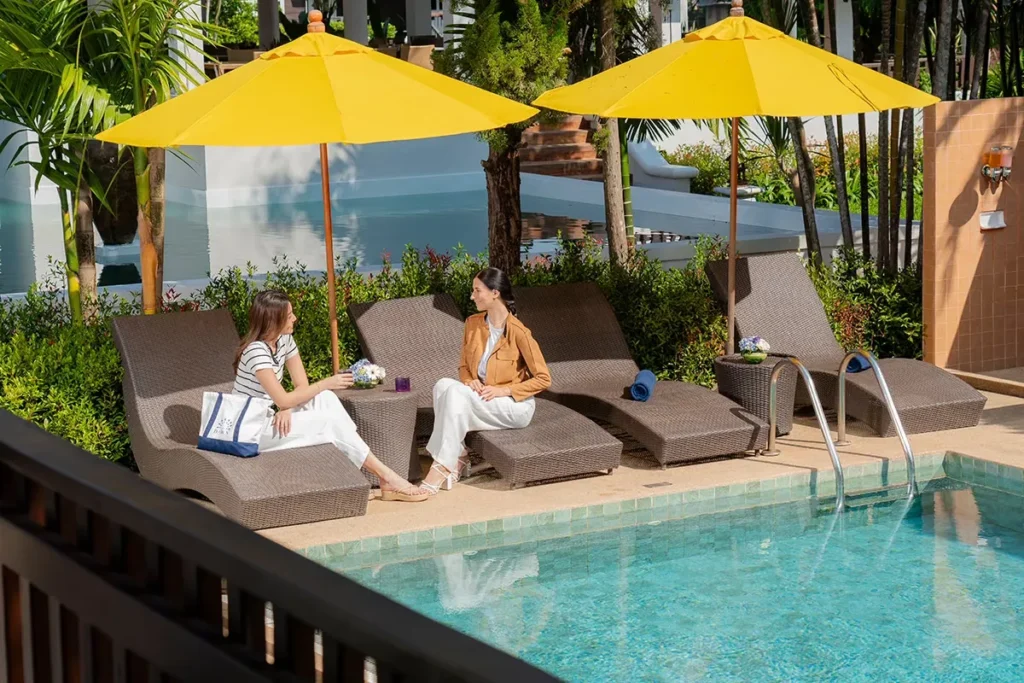
The best residential trauma programmes are those offered by Sierra Tucson and The Dawn Rehab Thailand.
- Sierra Tucson combines a licensed inpatient unit with residential care, which means that clients who need medical stabilisation do not have to transfer between providers.
- The Dawn runs a dedicated Trauma Programme with a minimum stay of eight weeks and treats depression, anxiety and addiction within the same treatment plan as the trauma. The programme is delivered by therapists who hold master’s degrees or higher and specialist trauma training, and it combines trauma-focused individual, group and somatic therapy. Clients complete the stabilisation phases of the Treatment Roadmap before trauma processing begins, which allows the work to proceed safely.
1. 24-Hour Clinical Support During Intensive Trauma Processing
Trauma processing can provoke distressing memories and strong emotions outside scheduled sessions, which makes clinical support between sessions essential. Sierra Tucson has registered nurses on site 24 hours a day, and Khiron Clinic is staffed at all hours. The Dawn has nursing staff on duty 24 hours a day, and its therapists adjust the pace of treatment whenever a client requires additional support.
2. Distance from Home as Part of Trauma Treatment
The home environment often contains the reminders, relationships and routines that sustain trauma responses. Treatment abroad removes clients from these triggers for the full duration of the programme. The Dawn in Chiang Mai and White River Manor in South Africa both treat international clients who travel for this reason.
3. Programme Length and the Depth of Trauma Work
Trauma processing that proceeds too quickly carries a risk of retraumatisation, and the length of a programme therefore determines the depth of trauma work that it can safely include. Khiron Clinics offers stays of two to six months, the longest in this comparison. The Dawn requires a minimum of eight weeks in its Trauma Programme, whereas the US programmes in this comparison last 30 to 45 days.
Best Complex PTSD Treatment Centres for Childhood Trauma
The best complex PTSD treatment centres for childhood trauma are The Meadows and The Dawn Rehab in Thailand.
- The Meadows based its clinical model, the Meadows Model, on Pia Mellody’s work on developmental trauma and treats that trauma through Post Induction Therapy.
- The Dawn treats adverse childhood experiences (ACEs) as one of the main factors behind mental health conditions, and its Trauma Programme addresses them directly. The Trauma Programme has an eight-week minimum stay, allowing complex trauma to be treated at a safe pace without the risk of retraumatising clients.
How Adverse Childhood Experiences Lead to Complex PTSD
Adverse childhood experiences (ACEs), such as abuse, neglect or exposure to domestic violence, are a common cause of complex PTSD. NHS guidance on PTSD and complex PTSD describes the condition as developing from trauma that is repeated or ongoing rather than from a single event. Complex PTSD commonly involves difficulty managing emotions, a deep sense of shame or worthlessness and difficulty sustaining close relationships, in addition to the flashbacks and avoidance seen in PTSD. Specialist centres therefore allow a longer stabilisation phase before trauma processing begins, because these patterns have formed over many years.
How to Evaluate a Residential Trauma Programme
Six standards distinguish specialist trauma care from general addiction treatment. Many treatment centres address trauma within their standard treatment programme, during the two individual therapy sessions that each client receives every week, whereas a specialist centre offers a dedicated trauma programme. The Dawn’s guide on how to choose rehab for PTSD explains each standard in greater detail, including the signs of an inadequate programme.
1. Clinicians Hold Degrees and Specialist Qualifications in Trauma Therapies
A specialist programme employs therapists who hold postgraduate degrees with specialist trauma training and who are certified in each modality the programme uses, such as EMDR and trauma-focused CBT. General counselling certificates, many of which can now be obtained through short online courses, do not provide the same level of expertise. A psychiatrist should also be available to review medication.
2. Evidence-Based Trauma Therapies Form the Basis of the Programme
EMDR, trauma-focused CBT and exposure therapy should form the basis of treatment, supported by somatic therapy that addresses the physical effects of trauma. Yoga, breathwork and other wellness activities complement that work but cannot replace it.
3. Depression, Anxiety and Addiction Are Treated in the Same Plan as the Trauma
Depression and anxiety frequently accompany trauma, and addiction often develops as a way of coping with it. A programme that treats these conditions together reduces the risk that one condition undermines progress on another.
4. Treatment Follows a Structured, Phased Approach
Safe trauma treatment begins with stabilisation, progresses to the development of skills for managing triggers and emotions, and only then proceeds to the processing of traumatic memories.
5. Accreditation and Regulation Can Be Verified Independently
Accreditation from an independent body such as CARF or The Joint Commission, or registration with a regulator such as the UK’s Care Quality Commission, can be confirmed directly with that organisation.
6. Aftercare Is Planned Before Discharge
The months after residential treatment carry a heightened risk of relapse or a return of trauma symptoms. A specialist programme therefore agrees an aftercare plan before discharge and maintains contact with clients after they return home.
Choosing The Dawn Rehab in Thailand for Trauma and PTSD Treatment
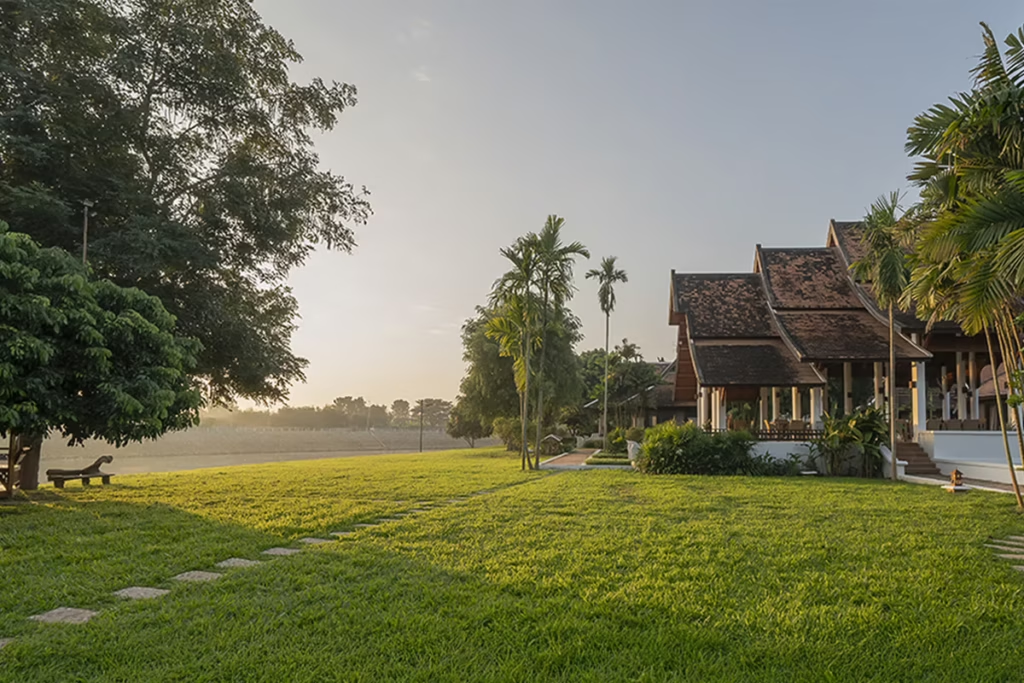
The Dawn Wellness Centre and Rehab gives clients the time and specialist care required to recover from trauma. The Dawn is one of very few centres worldwide to combine a dedicated trauma programme with treatment for co-occurring depression, anxiety and addiction.
Clients who choose The Dawn’s PTSD retreat in Thailand work with Western-trained therapists certified in the UK, the US and Australia. The Dawn is Asia’s only CARF-accredited centre, and they measure their treatment outcomes with recognised clinical scales at admission and discharge. Treatment at The Dawn costs considerably less than comparable programmes in the US, the UK and Switzerland, which allows clients to remain in treatment for the full period that their trauma work requires.
Choosing where to receive trauma treatment is a significant decision, and a confidential consultation with a specialist can inform that decision.
If you are considering trauma treatment abroad, contact our Admissions Team to arrange a confidential assessment and to learn whether our Trauma Programme is right for you.
FAQs About the Best Trauma and PTSD Treatment Centres
The best residential PTSD treatment centres are The Meadows in Arizona, The Dawn Rehab in Thailand, Sierra Tucson in Arizona, Khiron Clinics in Oxfordshire and South Pacific Private in Sydney. Each centre offers trauma-specific therapy in a residential setting, and the most suitable choice depends on the type of trauma, any co-occurring addiction or mental health conditions, the length of stay to which a client can commit and the budget available.
The best complex PTSD treatment centres are The Meadows and The Dawn Rehab in Thailand, which centre their trauma work on childhood and developmental trauma, and Khiron Clinics, which offers stays of two to six months. Complex PTSD generally requires a longer stay than PTSD from a single event, and The Dawn's Trauma Programme therefore requires a minimum stay of eight weeks.
Choosing the best PTSD treatment centre involves six criteria: therapists with degrees and specialist training in trauma therapies, evidence-based treatments such as EMDR as the basis of the programme, treatment for co-occurring depression, anxiety or addiction in the same plan, a phased approach that begins with stabilisation, accreditation that can be verified, and an aftercare plan agreed before discharge. Cost, location and programme length then determine the final choice.
Residential trauma treatment costs US$10,000 to 20,000 for 28 days at high-quality treatment centres in Thailand, compared with US$36,000 for 28 days at Sierra Tucson and US$27,400 to 35,200 for 28 days at The Meadows. Private health insurance in Australia can cover much of the cost at centres such as South Pacific Private.
Residential PTSD treatment lasts between three weeks and six months, depending on the centre and the complexity of the trauma. The US centres in this comparison last 30 to 45 days, The Dawn's Trauma Programme requires a minimum of eight weeks, and stays at Khiron Clinics last two to six months. Complex PTSD generally requires a stay at the longer end of that range.
PTSD and addiction can be treated at the same time, and treating them together reduces the risk that one condition impedes recovery from the other. The Meadows, The Dawn Rehab in Thailand, Sierra Tucson, South Pacific Private and White River Manor treat both in a single programme, whereas The Priory's Trauma-Informed Pathway does not accept clients with significant substance misuse.
